poem


poem20 Jun 2016 06:42 am
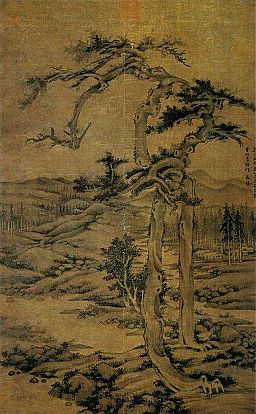
Wu_Zhen._Twin_Pines._180x111,4_cm._1328._National_Palace_Museum,_Taipei
girlhood maps we drew
pencil forests covering a table
no rivers or cities, just forests
of pine trees stacked arrows on arrows
parallel trunks to ground

you were a duchess and i was a robot
i was an empress and you were an elf
i was a warrior and you were a warrior made of gold

this
is the point in the story where you lose your shine
in college I learn I’m not so smart
age branches us to fond distance

but
you never did
i never did
it never did

instead we were white ghosts in rice-stepped mountains
instead we pulled weeds from the desert

now your daughter is an elf
and a warrior and a map of trees
now

we seek the linchpin of the moon

Share
poem13 Jun 2016 07:39 am

Lantau_Peak_Starry_Night_2014


 Photo by Eddie Yip from Groningen, the Netherlands (夏季銀河東升) [CC BY-SA 2.0 (http://creativecommons.org/licenses/by-sa/2.0) or CC BY-SA 2.0 (http://creativecommons.org/licenses/by-sa/2.0)], via Wikimedia Commons

Summer nights slay you. They’re sour-sweet
as cherries, as the blueberries ripening,
so rich you have to wipe them from your chin.
Thick enough with fruit that you must cut them
with a knife. And what is it that you find inside?
Thousands of lights. Stars. Fireflies. Gems
amongst the velvet fur of sky. They spill
like the Milky Way until the darkness is bled dry.

Echo of the white tides, what have you done,
emptying the night like a cut-purse? Will you
weave your spoils into a web to bind the flow
of your long hair? No. You stoop to gather up
the scattered riches, then raise your arms to paint
and populate the sky, spatter the sparks against
the dark, seeding it until it fruits again and all
your treasures drip like diamonds from its chin.

Share
poem30 May 2016 08:43 am
By Coyau / Wikimedia Commons, CC BY-SA 3.0, https://commons.wikimedia.org/w/index.php?curid=12817103

By Coyau / Wikimedia Commons, CC BY-SA 3.0, https://commons.wikimedia.org/w/index.php?curid=12817103

Dusk is the hour
when memory pulls strongest,
when twin green tendrils
of hope and despair
snarl my gut
and tug hard.

The day’s dying light
tastes of home,
my lost, soft, twilight world
soaked in all the shades of life
I seek fruitlessly amongst
the beans on my meagre plate.

As you would say,
we came here green and
ignorant of your ways,
lured by a rich siren call of bells,
the brightness of your land
burning in my eyes

like a forest of emeralds,
shiny promises that lied
though we did not know that then:
two innocents trapped by your false splendour
as much as the wolf pit
you found us in.

We clung to our green truth
for as long as we could,
starved until raw beans were offered
then kale, cabbage, the bread of life.
We continued to eat,
to consume your world,

thinking to immerse
your ways within us,
to become one with their enticing shine,
but they washed away our colour
and spat us out
leaving me one alone.

My brother-self withered,
gave up the struggle,
his soul returning
where his body could not.
I took a native mate, trying
to grow myself whole again.

I allowed him to immerse
himself in me, hoping
to become one with your ways.
The town’s hard stone streets
taught me I
will always now walk alone.

They say I lead
a normal life.
Normal for whom?
I have lost my colour,
my world,
my self.

I am faded as pale as you
except at dusk, the hour
when memory pulls hardest,
and fresh green tendrils of despair
grow and snarl
around my gut.

The Suffolk folk tale of the green children of Woolpit apparently dates from the twelfth century. The reapers were out working in the fields around the village, when out of one of the wolf pits emerged two vivid green children, a boy and a girl, their clothes unfamiliar and speaking in an unknown language. At first they wouldn’t eat, but eventually did, beginning with beans and vegetables. After a period of assimilation, including being baptized into the Christian Church, the boy died, but the girl lived on, learnt to speak English, married a local man and moved to King’s Lynn where she purportedly led a normal life.

Share
poem23 May 2016 08:00 am

450px-Kunsthistorisches_Museum_Vienna_0189

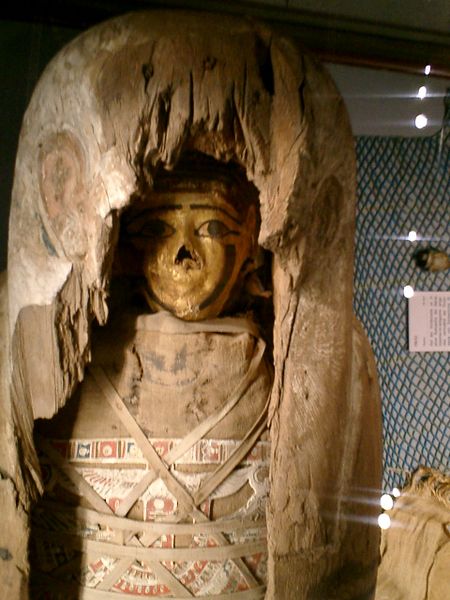
The mummy’s mask speaks
texts from the dead,
an unknown gospel in each cheekbone
a lost play for a forehead
referenced in antiquity, but
its lines only guessed at until now.
The layers peel back;
time peels away.

A laborers’s death,
no money for fancy masks so
the family makes do,
old paper lying around, worthless pages
too worn to scrape clean.
The mourners fold and seal them
layer by layer into a mask.

Unlayered now by new techniques
deeper texts emerge:
a bill of sale, a priest’s grocery list.
A fragment of a fairy tale
at the very edge of the mask,
the ancient paper doubles back on itself,
crafting a tale of doubles and doppelgangers.
In the center, covering the eyes,
a lost night of Scheherazade—
the djinn tricked into…
not a lamp, not a book,
but a mask that travels through time,
reveals its words,
but never quite breaks free.

Share
poem25 Apr 2016 08:08 am

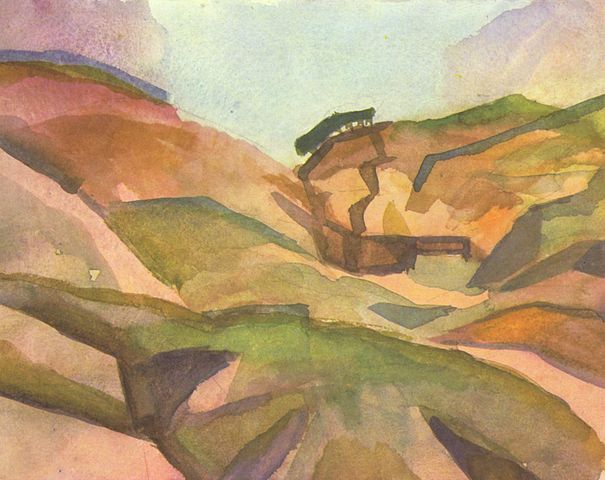
By August Macke - The Yorck Project: 10.000 Meisterwerke der Malerei. DVD-ROM, 2002. ISBN 3936122202. Distributed by DIRECTMEDIA Publishing GmbH., Public Domain, https://commons.wikimedia.org/w/index.php?curid=154247
You meet him on the road from nowhere to oblivion,
where the sky comes down like a backlot
and tumbleweeds tackle and wrestle in the sand
and gas always costs ten cents.
Faded as a lobby card, he will offer to pay for the lift
with the dust in his pockets and a wistful smile
just the list of a lance at a windmill,
but the burden in his rucksack
is his own light life,
expectant as the blank lines of a book.
If you ferry him as far as the Pacific,
he will vanish before the sun burns down to the sea,
the phantom hitchhiker of the painted desert
thumbing his way into roadside repute.
Stop the car among the broken timbers of the Triassic,
as heartshot red as a man with a promise in him,
and he may take his leave with civility
and his scenes stolen as absently as cigarettes,
the ghost-errant
who wore his cynicism
like a silver dollar on his sleeve,
the girl he haunted
gone with her paints to Paris long ago.

painting by August Macke - The Yorck Project
Share
poem18 Apr 2016 08:10 am

By http://wellcomeimages.org/indexplus/obf_images/5a/1e/dd149efd818af4b11c1fba7e0204.jpgGallery: http://wellcomeimages.org/indexplus/image/V0022736.html, CC BY 4.0, https://commons.wikimedia.org/w/index.php?curid=36555068

Slithering through the dark
bowels of the city in storm drains
where sewers often overflow,
the parthenogenic progeny
from an escaped pet python
survive on rats, unwary
city workers, and the odd
miscreant fleeing the law,
pressing the last breaths
from their trapped bodies.
Nightmares beyond reason,
they inhabit and haunt
these dank concrete
and steel caverns.

Some claim that through
generations born and surviving
in the fetid dark, they have bred
to albino pythons capable
of mesmerizing their prey
with a single glance of
their lustrous purblind eyes.

Others say there will come
a day when they will emerge
from the bitter depths below,
from storm drains and manholes
and along the banks of the river.
Shunning the harsh light of day
they’ll come in dead of night,
pale specters from hellish depths
devouring sinners in their beds.

Then there are those who
tell the story of a little girl,
seen after midnight, walking
barefoot through the dark
asphalt streets of the city,
wearing torn yellow pajamas
splattered with blood and
a young python twined
around her neck, a living,
breathing ophidian necklace.
She is the ghost of the city’s
corruption made manifest,
a perverse little demon
with sharp young teeth.

They say it’s her, with her
flaming hair, who leaves
a phosphorescent red trail
behind her, who was the
first to be dropped into
the sewers, the first to
have seen a nest of pythons,
to heat it with her human cells.

In revenge against those who
left her to a watery grave,
she has given to the snakes
an advanced intelligence,
a key to the weaknesses
of the Lords of the Earth
who walk on two legs.

If you meet her when
you’re alone after midnight
and your own path turns
a phosphorescent red,
grasp a silver crucifix,
pray to your failed gods
for salvation, take off
your shoes and run away.

They call her Anja The Red,
this ghostly witness who
warns that beneath your feet
where your worst fears
and obsessions fester,
a growing reptilian city thrives,
waiting to embrace you
with its slick relentless coils.

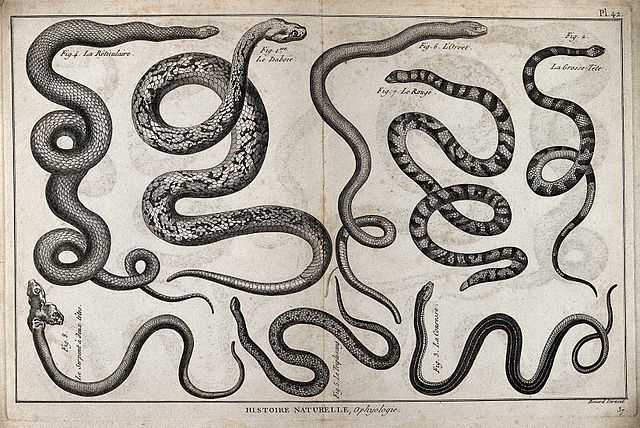
Eight snakes, including a reticulated python, a slow worm, a thirst snake, a Russell’s viper and a mythical two-headed serpent. Engraving, ca. 1778. Iconographic Collections
http://wellcomeimages.org/indexplus/image/V0022736.html
Share
poem11 Apr 2016 08:56 am

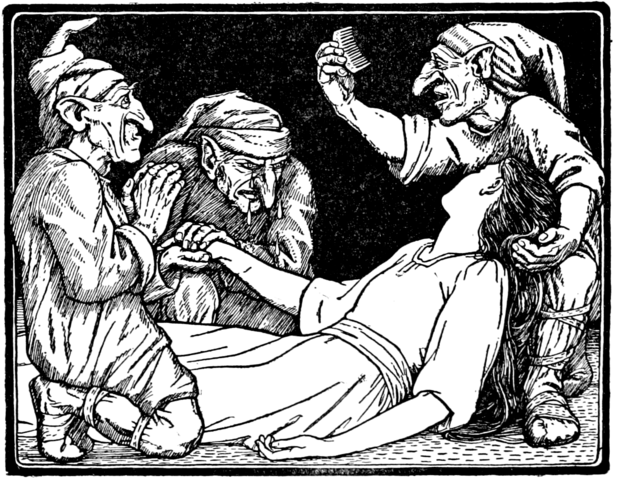
617px-Illustration_at_page_211_in_Europa's_Fairy_Book

Cast out from home
By that jealous gnome
Her father married
When her mother passed on.

Vain and younger,
She kept an oval mirror
In her dress pocket,
Always with her.

Constantly jealous
Of her stepdaughter’s beauty
And effortless warmth
With everyone around her,

She wondered
What it was about Snow,
That inspired so many
To love and protect her.

She tested her theory
By commanding her security
To kill young Snow
And dispose of her body.

But they couldn’t.
They’d known her since
She was a baby, watched her
Grow up into a gentle lady.

So they snapped photos of her
Lying “slain” in red paint
Then smuggled her aboard
A very large container

To an island far away
From her evil stepmother,
Where she was adopted by
A group of old dwarven miners

Who had recently lost
Their own wives and daughters
To a terrible outbreak of influenza
That killed almost all the villagers.

She became their hen mother,
Making sure they had hot food
And fresh water, clothes laundered
And no ants in their cupboards,

While they toiled in the dark mines
Where rats loved to gather,
For ore they could trade to buy
Nice things for their daughter.

They were kind to her,
These fathers she’d always
Hoped for, and now she had
Seven to care for her.

Life was peaceful for Snow
And her adoptive fathers
Till visitors arrived
And one snapped her picture,

Posting it onto social media
Where her face had been tagged
Even before she was a toddler,
Emailing an alert

To her wicked stepmother
Who hired a hacker to track
And locate her, easy with
Location embedded in the picture.

Proof of life confirmed,
She sent assassins after her,
Each thwarted by seven dwarves
With large iron hammers.

They would not lose
This precious new daughter.
They’d sworn an oath
To love and protect her.

So Stepmother disguised herself
As a humble villager,
And travelled in person
To find Snow and destroy her.

She had trained for some years
With a nefarious grandmaster
Who had as few qualms
As Stepmother’s own mother.

She found Snow picking herbs
At the edge of the forest
And sent poison-laced flies
To land on her bananas.

Snow ate while she cooked,
Making shrimp gravy for dinner.
It was Brag’s 80th birthday
And she wanted it to be super.

As the poison worked into her,
She felt a strange numbness.
She fell backwards, eyes glazed,
Fixed on the Big Dipper.

Stepmother leapt with joy.
Snow was dead,
The thorn finally
Out of her head.

She boarded
The next ferry
Before the miners
Could pulp her.

Oh, they were heartbroken
When they finally found her,
In the mud, apples strewn
Like petals all around her.

Dopey, the youngest,
Was a prolific healer.
He gathered some herbs
And proceeded to feed her.

She choked and breathed,
Spewing a black poison,
Thankfully neutralised by
Dopey’s concoction.

Snow healed and lived,
Refusing reprisal.
What would that make them?
She reasoned to her fathers.

So they moved inland
Where there was no reception.
Snow believed vanishing
Was the better option.

One day, Stepmother returned,
Just to be certain. Her mirror
Told her Snow lived, and was
Still beautiful and unburdened.

Thor and Brag were there,
Waiting for her by the harbour.
They’d been waiting there
Impatiently, every day for her.

For them, there was
No such thing as safe,
Not until the enemy was slain.
They seized her when she arrived,

Showed her a picture of Snow,
Happy and alive, before smashing
Her head in with their hammers
And gutting her with a knife.

Snow lived out her days
In that peaceful place
With fathers who adored her,
And animals that loved her.

She never again feared her Stepmother
But for the occasional nightmare
That shook and woke her,
Till she sat up, drenched

In tears and horror,
Pulling out her phone,
Watching over and over
The video of how

Her Stepmother was slain.
Only then could she sleep again.

Share
poem04 Apr 2016 11:27 am

Planetary_Analogue
On the slowly spinning planet Kroz,
there is a plain where
frost builds structures layer by layer
over many years,
in the dark of a decade-long night.
As dawn creeps closer,
the frost forms towers,
delicate minarets,
buttresses that hold up no walls,
cities of the finest fragility.

The people of Kroz pay no attention
to the ice.
Those who live in mine towns
plod through their work, day or night
unchanging.
The bulk of the people,
nomadic dawn chasers,
shuttling between the slow morning’s edge
and necessary locations
deeper into night or day,
avoid the plain
in their peregrinations.
So structures grow unnoticed.

In all the planet’s literature
there is no mention of the frost by moonlight,
no songs of sweethearts meeting there,
no legends or tragedies
of the people who once lived within
or the fate of those who dared to sleep inside.

As dawn nears the plain
everything changes.
The planet stops.
Everyone gathers outside
the circle of frost buildings;
no one speaks,
no one records a thing,
no images of any medium.
no songs to recall the sight;
but with breaths held,
all watch the flash of an instant
as the sun turns the frost
to matrices of light.

Then dawn has come, the buildings gone.
They return to their lives,
and only the fleeting thoughts
of ephemeral art remain.

Share
poem28 Mar 2016 08:55 am

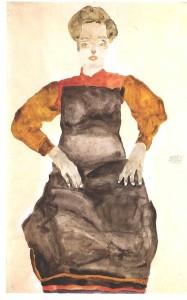
Schiele_-_Sitzendes_Mädchen_mit_schwarzer_Schürze_-_1911

Her grandmother would nurture them,
teasing them out from beneath stones,
unsnagging them from damp moss.
She’d keep them in her apron pockets,
which were always damp. “These tiny
thingeens are ancient creatures of the sea.
So ye must keep them moist, girleen.
Otherwise they’ll dry out. They’re only tiny now
because their seas have long vanished.
But keep them with you and their seas will return.”

Grandmother kept them safe there in her apron for hours.
Then would let them go again. But before letting them go
she’d hold them on the tip of her forefinger
and lift them up to the sunlight. Then she’d bid
her grand-daughter to look at them. The first time she looked,
she could see that they were transparent under the light,
the inner workings of their bodies like cogs in a machine.
“Mind these thingeens as if they were money,” said her grandmother.

She didn’t really know why her grandmother
put so much importance upon them,
but she trusted her in all things.
That is why she always nurtured them herself,
keeping them safe and moist in her pockets, or else
always had some in her purse or a side section of her handbag.
She came to realise their significance only as she aged,
as she became bent and baggy.

She could feel the sea in her hair,
even though she was miles from any ocean,
and knew that it was the woodlice who bid its presence.
And she could hear waves, ancient as space, crashing all around her.
In time she could hear the woodlice themselves,
their voices like small timepieces ticking seconds.
And seconds that added up to minutes and hours and days and weeks,
and months and years and forever. All of Time was their
conversation, and she listened to every word, until she
was part of that eternal noise. And that noise was creation,
imminent and transcendent. And she knew finally the importance
of minding those woodlice, and wished now that she had someone to tell.

painting: Sitting girl with black apron by Egon Schiele
Share
poem21 Mar 2016 08:55 am

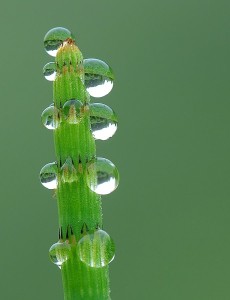
By I, Luc Viatour, CC BY-SA 3.0, https://commons.wikimedia.org/w/index.php?curid=2590826

My witchery awakens
with the rising season.
My winter-faded soul
gains strength with each day
we creep past the equinox.
The earth’s aching
with growth so I tie garlands
into my hair, go dazed-headed
from the light —

In this season
the ground-up remains of road-grit
turn into goblin-dust.
Aeroplanes on a clear star-night
become dragons, scales flashing.
I change too, shed my dull winter skin.

Yes: I see the world
through a witch’s lens.
It’s spring, and I awake. We awake.

Photo by I, Luc Viatour, CC BY-SA 3.0, https://commons.wikimedia.org/w/index.php?curid=2590826
Share

« Previous PageNext Page »